
Dermatology
Dermatology may include medical treatment, minor surgery and selected laser procedures. Diagnosis and suitability should be confirmed by a qualified clinician.
Educational information only. The appropriate operation or treatment depends on diagnosis, test results, overall health, and a qualified clinician’s assessment.
 AI
AIYour specialty guide
What is Dermatology?
Dermatology concerns the skin, hair and nails. It includes diagnosis of inflammatory disease, infections and suspicious lesions as well as selected cosmetic procedures. The cause of a skin change should be understood before treatment is chosen.
Conditions and concerns assessed
People may be referred for the following concerns. The diagnosis and severity determine which care is appropriate.
- Acne and scarring
- Eczema and psoriasis
- Changing skin lesions
- Hair and nail concerns
Understand the diagnosis
Assessment and tests
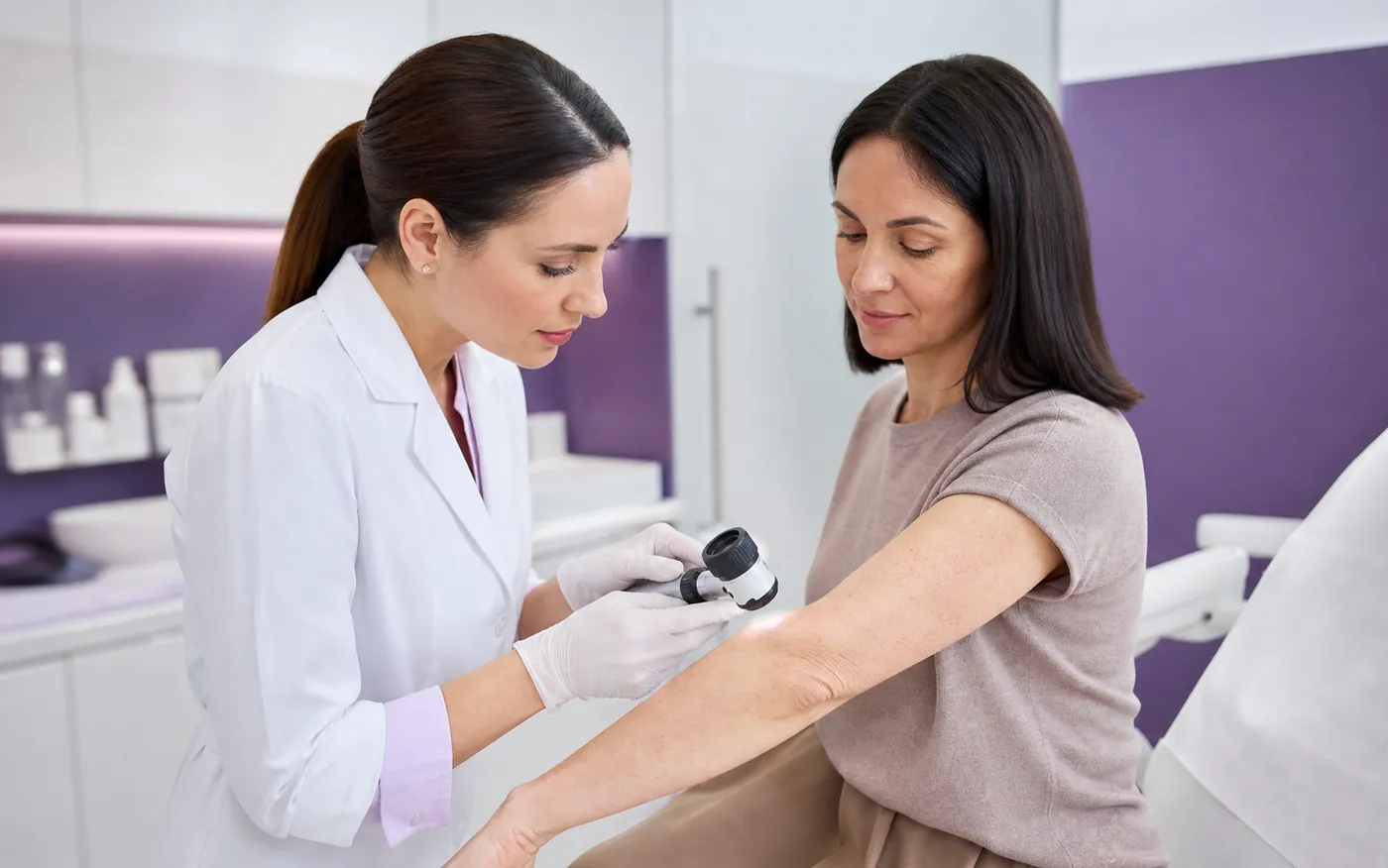
A dermatologist reviews the pattern and history of symptoms. Examination, dermoscopy, sampling or biopsy may help clarify the diagnosis.
Understand the plan
Treatment approaches
Care can include topical or systemic medicines, lesion removal and selected laser procedures. Suitability depends on the diagnosis and skin characteristics.
Preparing for your dermatology consultation
Bring a symptom timeline, previous diagnoses, reports and a list of medicines and allergies. Explain what has already been tried and how the problem affects daily life. Ask which records the specialist needs before repeating tests.
- 01
Organize reports and scan images
- 02
Write down your goals and questions
- 03
Confirm the assessment and follow-up plan
For care abroad, our international patient support team helps coordinate records and appointments before travel.
Recovery and continuing care
Some conditions need ongoing management. After a procedure, ask about wound care, sun protection, pigmentation changes and when results should be assessed.
The care team should explain the expected benefit, important risks and what to do if symptoms change. Agree on a follow-up contact and obtain the treatment summary before returning home. Recovery estimates are individual and are not a guarantee.
Common questions about dermatology
What happens at a dermatology assessment?
A dermatologist reviews the pattern and history of symptoms. Examination, dermoscopy, sampling or biopsy may help clarify the diagnosis.
Does a specialist consultation always lead to a procedure?
No. A consultation establishes the diagnosis and helps compare the likely benefits and risks of suitable approaches. Monitoring, medicines or rehabilitation may be appropriate, depending on the condition.
How should I plan treatment costs and travel?
Ask the responsible hospital to explain tests, treatment, hospital care, medicines and follow-up inclusions. Confirm the appointment and expected stay before booking travel; published prices are planning information.
Further reading: Dermatology reference. These original summaries are general educational information; a named clinical review has not been recorded.
Explore treatment costs in India, care in Mumbai and Navi Mumbai, or request treatment assistance.
Treatment information
Treatment guides and indicative costs
Every card opens a full treatment guide with what it involves, preparation, recovery, risks, questions to ask and USD planning ranges.
Laser Skin Resurfacing
→Laser skin resurfacing removes or heats selected skin layers to improve texture, scars, wrinkles or pigmentation. Skin type and the condition being treated determine the safest settings.
$18 – $62
Mole & Skin Lesion Removal
→Mole & Skin Lesion Removal is a dermatology treatment whose suitability depends on the diagnosis, investigations and the patient’s goals.
specialist review required
Doctor profiles
Specialists connected to this care area
Review qualifications, stated experience and clinical interests. Final suitability can only be determined after a doctor reviews the patient’s records.
Before treatment is planned
Confirm the diagnosisAsk which tests support the diagnosis and whether another clinical opinion would be useful.
Discuss suitable approachesDiscuss non-surgical and surgical alternatives, expected benefits, limitations, and risks.
Plan follow-up careUnderstand rehabilitation, warning signs, medicines, and who will manage care after returning home.
Sources and review status
This is general patient information. A named clinical review has not been recorded for this page. Use the resources below for further reading and discuss decisions with your treating clinician.
- CDC Yellow Book: medical tourism, hospital checks and continuity of care
- NHS: preparing for surgery and questions to ask
These resources address general planning and do not verify every procedure-specific statement or endorse Doctatoc. How we label sources and reviews.