

Surgeon · Orthopaedics
Dr Sanjay Dhar
Director, Department of Orthopaedics
View profile →Checking availability…
Orthopedic care can include joint replacement, arthroscopic procedures and trauma reconstruction. Technique, implant choice and rehabilitation planning require individual provider assessment.
Educational information only. The appropriate operation or treatment depends on diagnosis, test results, overall health, and a qualified clinician’s assessment.
 AI
AIYour specialty guide
Orthopedics focuses on bones, joints, muscles, tendons and ligaments. The aim is to improve movement and function after injury or disease. Orthopedic care includes rehabilitation and non-operative treatment alongside surgery; a scan finding alone does not determine whether an operation is needed.
People may be referred for the following concerns. The diagnosis and severity determine which care is appropriate.
Understand the diagnosis
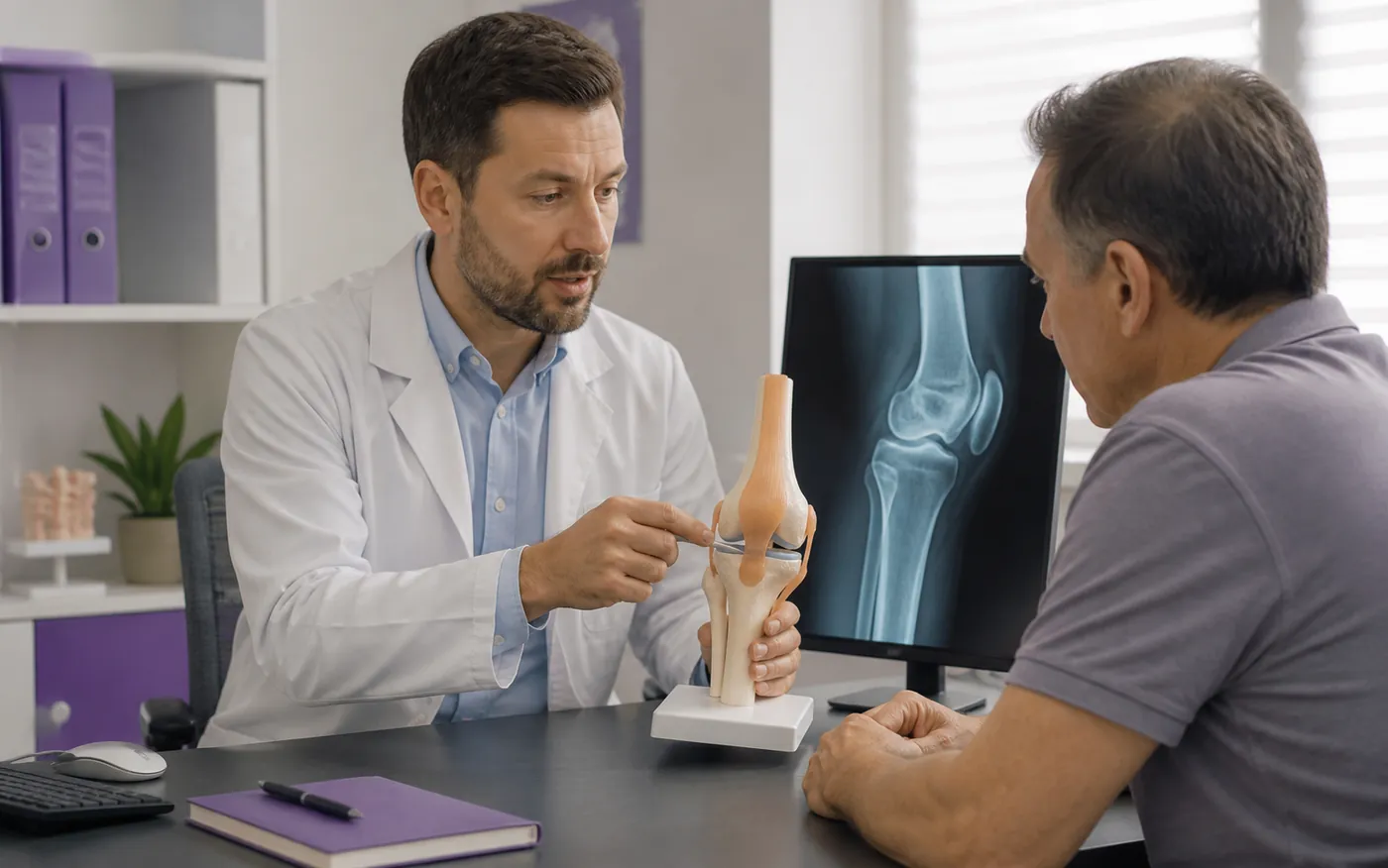
The clinician examines movement, stability and strength. X-rays and, when indicated, MRI or other tests help explain the symptoms.
Understand the plan
Physiotherapy, activity changes and medicines may be discussed before joint replacement, fracture fixation or ligament reconstruction.
Bring a symptom timeline, previous diagnoses, reports and a list of medicines and allergies. Explain what has already been tried and how the problem affects daily life. Ask which records the specialist needs before repeating tests.
Organize reports and scan images
Write down your goals and questions
Confirm the assessment and follow-up plan
For care abroad, our international patient support team helps coordinate records and appointments before travel.
Recovery centres on safe movement and progressive rehabilitation. Ask about weight-bearing restrictions, walking aids and return to work or sport.
The care team should explain the expected benefit, important risks and what to do if symptoms change. Agree on a follow-up contact and obtain the treatment summary before returning home. Recovery estimates are individual and are not a guarantee.
The clinician examines movement, stability and strength. X-rays and, when indicated, MRI or other tests help explain the symptoms.
No. A consultation establishes the diagnosis and helps compare the likely benefits and risks of suitable approaches. Monitoring, medicines or rehabilitation may be appropriate, depending on the condition.
Ask the responsible hospital to explain tests, treatment, hospital care, medicines and follow-up inclusions. Confirm the appointment and expected stay before booking travel; published prices are planning information.
Further reading: Orthopedics reference. These original summaries are general educational information; a named clinical review has not been recorded.
Explore treatment costs in India, care in Mumbai and Navi Mumbai, or request treatment assistance.
Treatment information
Every card opens a full treatment guide with what it involves, preparation, recovery, risks, questions to ask and USD planning ranges.
Knee replacement resurfaces damaged parts of the knee with components selected for the patient’s anatomy, activity and bone quality. Assessment includes pain, function, alignment and imaging.
$1,834 – $4,647
Hip replacement replaces damaged joint surfaces with an artificial ball and socket to reduce pain and restore movement. Implant design and surgical approach depend on bone, age, activity and diagnosis.
$1,834 – $4,280
ACL reconstruction replaces a torn anterior cruciate ligament with a graft to help restore knee stability. Examination and MRI findings are combined with the person’s activity goals.
$1,752 – $2,503
Doctor profiles
Review qualifications, stated experience and clinical interests. Final suitability can only be determined after a doctor reviews the patient’s records.
Confirm the diagnosisAsk which tests support the diagnosis and whether another clinical opinion would be useful.
Discuss suitable approachesDiscuss non-surgical and surgical alternatives, expected benefits, limitations, and risks.
Plan follow-up careUnderstand rehabilitation, warning signs, medicines, and who will manage care after returning home.
This is general patient information. A named clinical review has not been recorded for this page. Use the resources below for further reading and discuss decisions with your treating clinician.
These resources address general planning and do not verify every procedure-specific statement or endorse Doctatoc. How we label sources and reviews.